
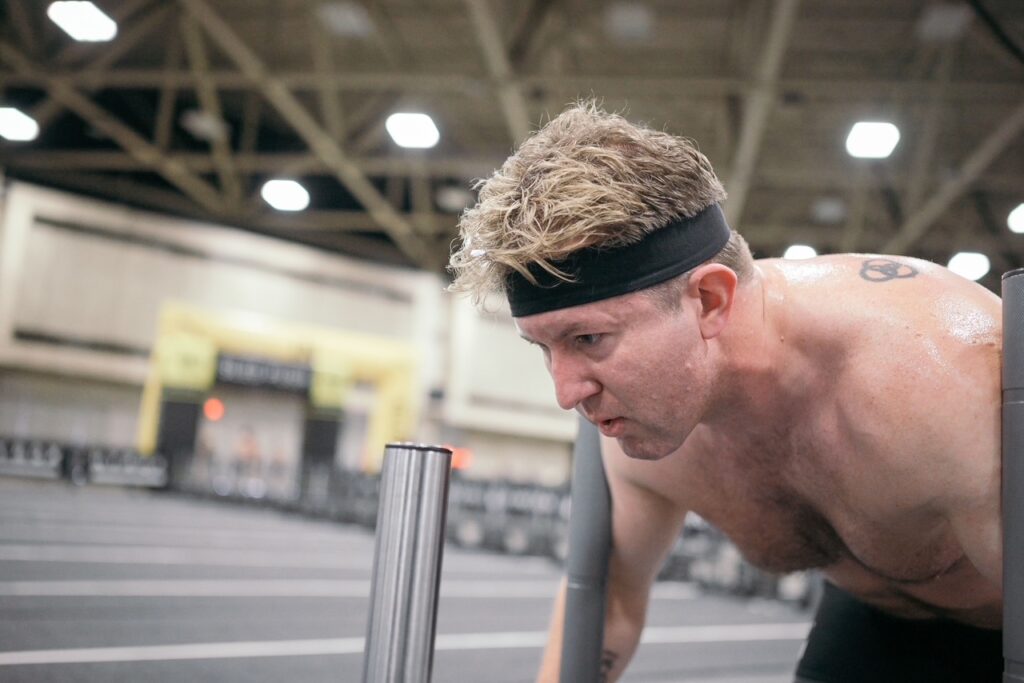
Personalized fitness is the key to results that truly last. Unlike fad diets or generic plans that promise quick fixes, a personalized approach adapts to your goals, body composition, and lifestyle. At Pledge To Fitness®, this approach is guided by The Pledge To Fitness Method — our holistic system built on three essential pillars: science-based training, recovery massage, and nutrition coaching, all designed to create lasting improvements in strength, energy, and overall well-being.
Quick fixes may deliver short bursts of progress, but they rarely last. Without balance, many people encounter plateaus, burnout, or injury. The Pledge To Fitness Method integrates structured progression, recovery, and daily lifestyle support so you can continue improving with confidence and consistency.
In this guide, you’ll discover how The Pledge To Fitness Method combines progressive training phases, balanced energy systems, tailored nutrition, and restorative massage to produce sustainable results through personalized fitness. You’ll also find supporting resources — from stability training to endurance and recovery — demonstrating how each element works together within a complete, long-term fitness system.
The Pledge Methodology: Training in 4 Phases
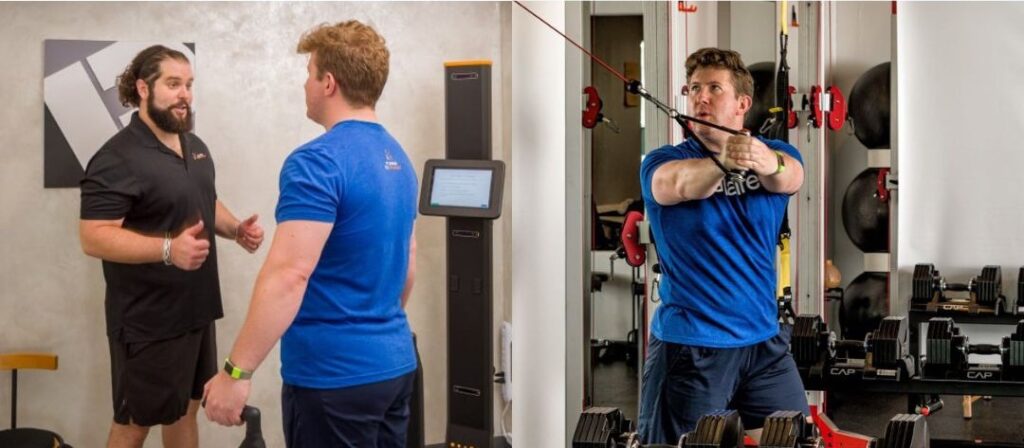
Our training method is built on the OPT model (Optimum Performance Training), a proven framework used in advanced fitness and human performance programs. At Pledge To Fitness®, we adapt this model into a four-phase system that guides you safely and progressively from foundational stability to maximal strength — ensuring structure, consistency, and long-term results.
Most fitness programs fail because they lack structure. People jump from cardio challenges to random weight routines without following a plan that builds step by step. At Pledge To Fitness®, our coaches guide you through a progressive four-phase system designed to deliver safe, lasting results.
Phase 1: Stability
Every fitness journey begins with a strong foundation. Stability Training Exercises focus on posture, balance, and joint control. By mastering proper movement first, you reduce the risk of injury and prepare your body for more advanced work.
Phase 2: Endurance Training
This phase is aimed at improving muscular endurance and enhancing cardiovascular efficiency. It’s ideal for those who are new to exercise or returning after a long break. Workouts typically involve low to moderate resistance with higher repetitions (12-20 reps). The goal of strength training exercises is to condition the muscles and cardiovascular system to improve stamina and prepare the body for the more intense training phases that follow.
Phase 3: Hypertrophy
Hypertrophy training increases the size of your muscle fibers, giving you visible changes in muscle definition and boosting metabolism. During this stage, you’ll start noticing measurable improvements in muscle growth — the kind explained in What the Heck Is Hypertrophy Training? — while your metabolism accelerates through consistent effort, as outlined in Boost Metabolism with Strength Training. Over time, this phase promotes deeper structural adaptation in your muscles through processes like Muscle Growth: Hypertrophy and Sarcomere Addition. helping your body prepare for even greater strength and performance.
Phase 4: Maximal Strength
At the peak of the progression, you’ll work toward lifting heavier loads and unlocking new levels of power and resilience. By the time you reach this phase, your body is fully prepared — making it possible to train at higher intensities safely and effectively
Why Structured Training Delivers Lasting Results
This progression isn’t random. It’s grounded in exercise science principles showing that structured resistance training with progressive overload leads to better long-term results than unplanned or one-size-fits-all programs. At Pledge To Fitness®, this framework is personalized to each client — meaning you always know your program is safe, effective, and built for lasting success.
Energy Systems: The Science That Powers Your Training
The Phosphagen System (ATP-PC)
This system powers short, explosive movements like sprints or heavy lifts. It provides energy quickly but only lasts a few seconds. Training it builds the foundation for maximum strength and speed.
The Glycolytic System (Anaerobic)
When activity lasts longer than a few seconds, your body switches to breaking down stored carbohydrates without oxygen. Think of it as the “bridge” for moderate-intensity exercise like circuit training or interval workouts. Training this system improves your ability to push through tough efforts.
The Aerobic System
For longer, steady-state activities like running, cycling, or rowing, your body relies on oxygen to generate energy. Aerobic training builds endurance, supports recovery between workouts, and contributes to overall cardiovascular health.
Balancing All Three Systems for Complete Fitness
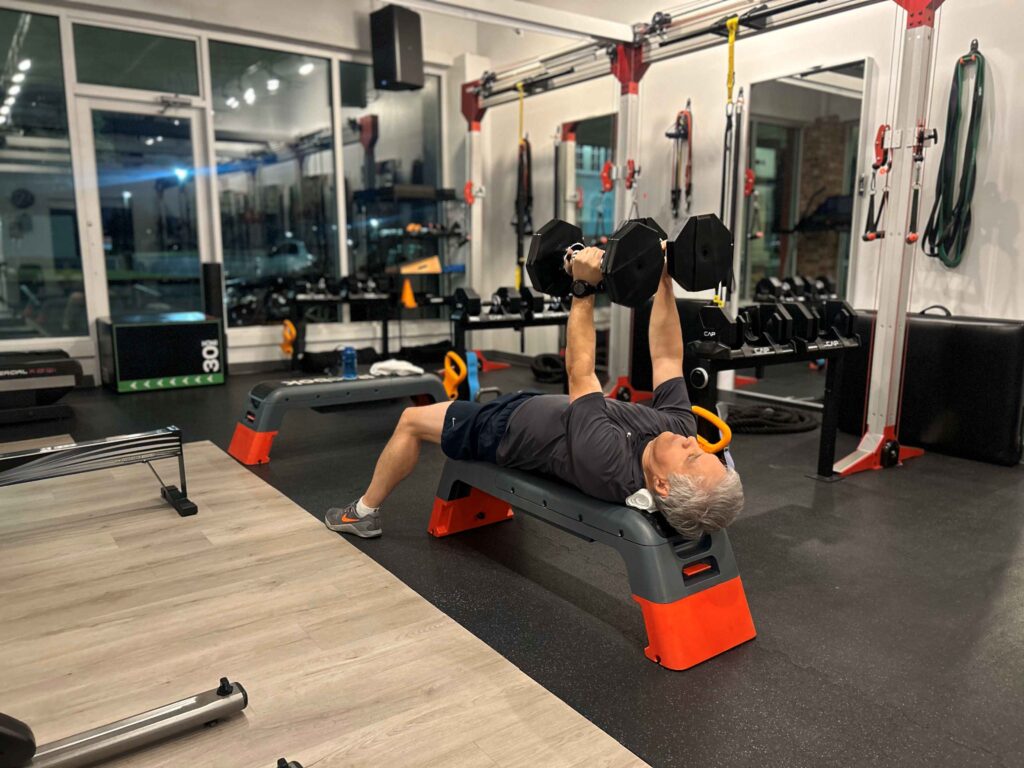
When your program balances all three systems, you don’t just get stronger or faster — you develop complete fitness that enhances your performance in workouts, sports, and daily life. At Pledge To Fitness®, we integrate energy system training into every phase to make sure your progress is both efficient and sustainable. By understanding how the body uses energy — from aerobic and anaerobic exercise to the science behind their interaction — you can train smarter and achieve lasting results, as explained in The Health Science Behind Aerobic and Anaerobic Exercise.

Endurance & Performance: Going Beyond Strength
Strength training is essential, but true personalized fitness also includes endurance. Cardio training builds your heart, lungs, and recovery capacity — all of which help you train harder, recover faster, and live healthier. At Pledge To Fitness®, we integrate endurance work alongside strength to create a balanced program that supports long-term results.
Why Endurance Matters
Endurance training improves cardiovascular health, supports fat metabolism, and provides the stamina to get through both workouts and daily life.
- “Higher levels of cardiorespiratory fitness are strongly associated with lower risks of chronic disease and mortality” (Blair et al., 1989).
- “Exercise capacity is a stronger predictor of survival than established risk factors such as smoking, hypertension, or diabetes” (Myers et al., 2002).
Different Types of Endurance Training
Steady-State Cardio: Running, rowing, cycling, or swimming at a consistent pace to build aerobic capacity. For example, bike your way to a faster sprint by maintaining controlled, sustained effort that gradually increases endurance.
Interval Training: Alternating bursts of effort and recovery to improve both aerobic and anaerobic performance. Understanding how fast-twitch and slow-twitch muscle fibers respond to this kind of training can help you push limits more effectively.
Sport-Specific Training: Activities like sprint cycling or hiking that combine endurance with enjoyment and variety. If you’re looking for motivation to keep moving, embrace cardio exercise as a foundation for long-term fitness and vitality.

Cardio + Strength = Sustainable Fitness
By combining endurance with strength, you create a complete fitness foundation that improves performance, supports body composition goals, and helps prevent plateaus. That’s why our coaches ensure every personalized plan includes the right mix of cardio and resistance training for your needs.
Form & Injury Prevention: Training Safely, Progressing Wisely
One of the biggest obstacles to lasting results is injury. Poor form, rushing progression, or ignoring recovery can derail months of progress. That’s why personalized fitness at Pledge To Fitness® always emphasizes safe movement and injury prevention — so you can train consistently and keep improving year after year.
“They pace me — they give me a rhythm where I don’t hurt myself or overdo it. That’s the best part of working with a trainer, with someone who’s coaching you. If I had tried to do this on my own, I probably would have injured myself already, just by pushing too hard. You start to realize how much you learn when someone guides you the right way.” — Claudia L., Pledge To Fitness® client
Why Proper Form Matters
Correct technique ensures that muscles, joints, and connective tissues work the way they should. It not only helps you get the most out of each exercise but also prevents overuse injuries. If you’ve ever struggled with form, check out Master Your Squat for Optimal Gains for guidance on improving movement quality and building strength safely.
Training Smart for Long-Term Success
Sustainable progress doesn’t come from pushing too hard, too fast. Structured, gradual progression reduces injury risk and helps your body adapt safely. “Progressive resistance strength training significantly improves physical function in older adults while reducing falls and injury risk” (Liu & Latham, 2009).
Personalization Prevents Setbacks
Every client has different strengths, weaknesses, and past injuries. Our trainers adapt each program to your needs — whether that means modifying a movement, changing the load, or building stability before adding intensity. This tailored approach ensures that your fitness journey is not only effective, but safe.
Safety First = Consistency That Lasts
When form and progression are prioritized, you reduce the risk of setbacks and stay consistent — the real secret to lasting results. At Pledge To Fitness®, injury prevention isn’t an afterthought, it’s built into every personalized program.
Recovery & Massage: The Overlooked Pillar of Fitness
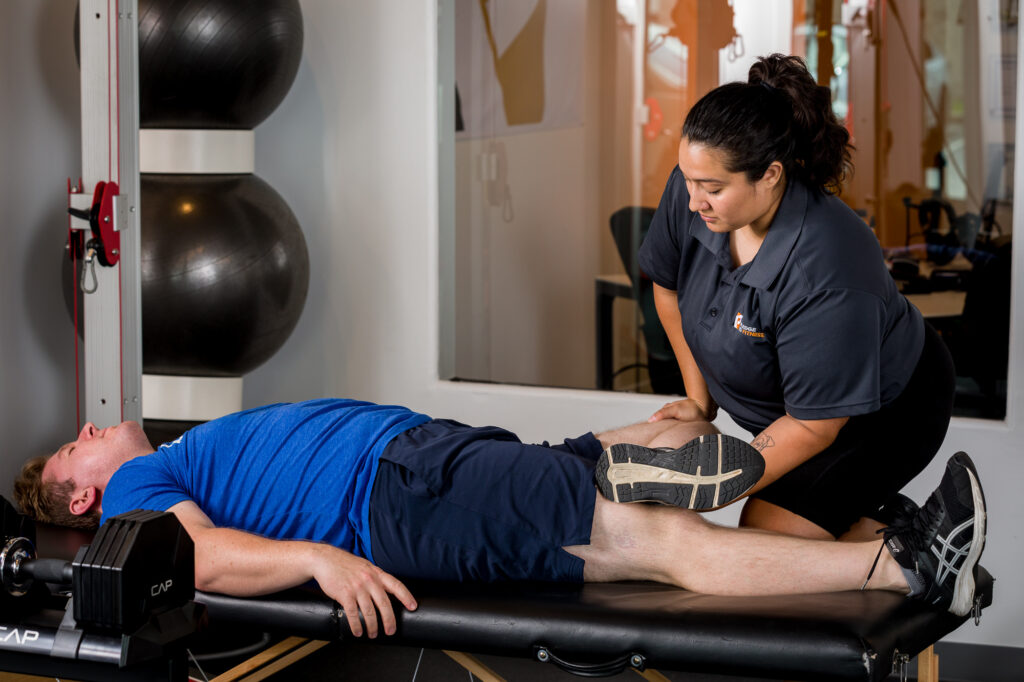
Progress doesn’t happen during your workout — it happens after. Muscles grow, adapt, and get stronger in the recovery phase. That’s why at Pledge To Fitness®, we make recovery just as important as training and nutrition.
Why Recovery Matters
When you push your body through resistance training, endurance workouts, or high-intensity intervals, you create small amounts of stress in the muscles. Recovery is when your body repairs these microtears, making muscles stronger and more resilient. Without proper recovery, progress stalls and the risk of injury rises.
Massage Therapy for Better Results
Massage isn’t a luxury — it’s a science-backed recovery tool. Regular massage sessions can:
- Reduce muscle soreness and stiffness after intense training, helping your body recover faster and more effectively, as discussed in Tackle Muscle Soreness: Strategies for Post-Workout Recovery.
- Correct past issues and muscular imbalances that cause discomfort during your workouts and daily routine, illustrating how exercise and massage work in synergy to restore balance and improve performance.
- Improve circulation, delivering essential nutrients and oxygen to recovering tissues for more complete repair and recharge after training.
- Enhance mobility and flexibility, making every movement more efficient.
- Support mental relaxation, lowering stress levels that can slow down physical recovery.
The Synergy of Training + Massage
When massage is integrated into your personalized fitness plan, it accelerates recovery, reduces downtime, and helps you stay consistent. This synergy allows clients to train harder, bounce back faster, and feel better — inside and outside the gym.
Nutrition & Lifestyle: Habits That Support Your Training
Exercise alone won’t deliver lasting results. To achieve true progress, your personalized fitness plan must be supported by nutrition and lifestyle habits that fuel your body, speed recovery, and keep you consistent. At Pledge To Fitness®, we help you align your workouts with daily choices that make sustainable fitness possible.

Nutrition That Fuels Results
Your body needs the right balance of protein, complex carbohydrates, healthy fats, and micronutrients to perform at its best. Prioritizing whole, nutrient-dense foods provides steady energy, supports muscle repair, and helps manage weight.
- Adding lean protein at every meal helps preserve and build muscle. As Phillips & Van Loon (2011) note, “dietary protein is essential to stimulate muscle protein synthesis and support recovery.”
- Incorporating colorful vegetables and fruits delivers the vitamins, minerals, and antioxidants your body needs to adapt to training.
- Choosing whole grains and legumes ensures long-lasting energy during workouts.
- Staying hydrated throughout the day keeps energy levels and performance stable.
To put these principles into practice, learn how to build sustainable fitness and nutrition habits that support long-term results and a balanced lifestyle.
Lifestyle Factors That Matter
Small lifestyle adjustments make a big difference in how your body adapts to training:
- Sleep: A consistent sleep routine improves recovery, energy, and focus. According to Watson et al. (2018), “insufficient sleep is associated with reduced performance, impaired recovery, and negative health outcomes.”
- Stress management: Techniques like deep breathing, walking breaks, or journaling help lower stress hormones that can interfere with results.
- Consistency: Maintaining routines during weekends, holidays, or busy schedules keeps your progress steady.
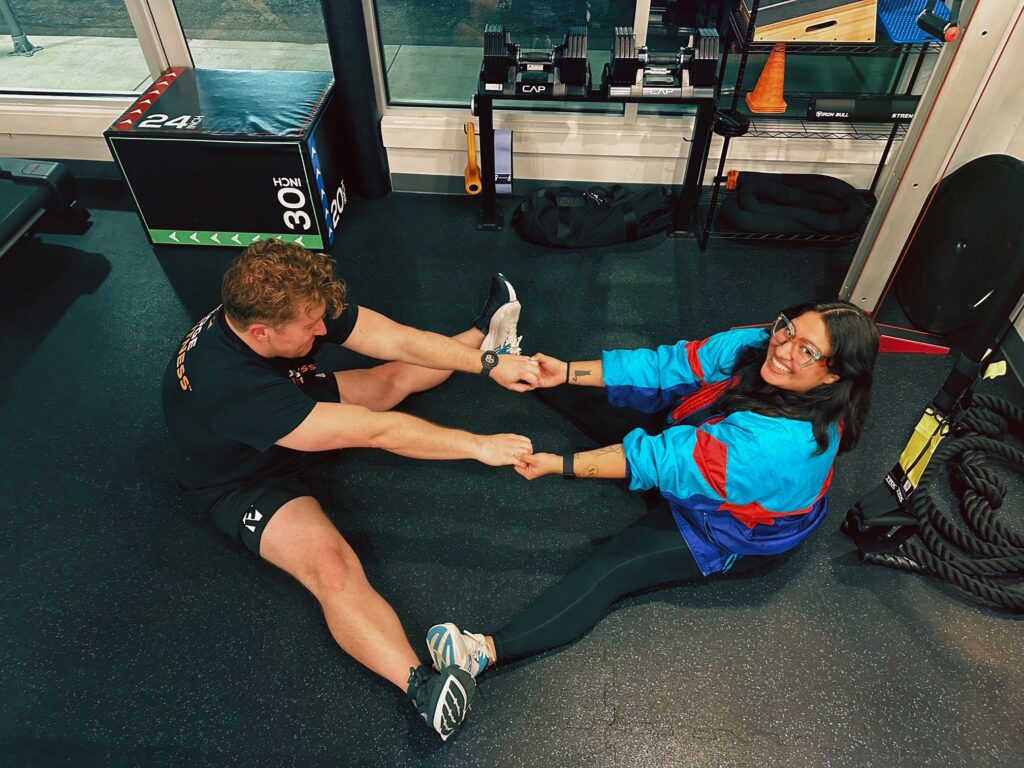
Healthy Habits Build Lasting Results
When nutrition and lifestyle habits are aligned with your training, your body has the full rest, and resilience it needs to keep improving. This balance is what makes personalized fitness sustainable — not just for weeks, but for years.
Results That Last: The Promise of Personalized Fitness
At the end of the day, what matters most isn’t a quick change — it’s whether your results last. That’s where personalized fitness makes the biggest difference. By combining structured training phases, balanced energy systems, tailored nutrition, and smart recovery, you set yourself up for progress you can see and feel, year after year.
“They do a really good job of taking notes. I think they have a shared system or something, because the trainers always seem to be on the same page. No matter who I’m working with that week, they pick up right where we left off.” — Collin, C. Pledge To Fitness® client
The Science of Long-Term Success
Generic programs may deliver short-term gains, but without structure and progression they rarely last. “Structured, progressive resistance training programs consistently outperform random or one-size-fits-all approaches for long-term outcomes” (Kraemer & Ratamess, 2004).
Real People, Real Progress
At Pledge To Fitness®, our clients see measurable improvements in strength, body composition, and energy — not just in the gym, but in daily life. From building the confidence to lift heavier weights, to having more stamina for sports or family activities, the results go far beyond physical appearance.
Consistency Over Perfection
The real key is consistency. When your program is personalized to your needs, safe for your body, and backed by science, you can keep going even when life gets busy. Progress may not always be linear, but with the right support, your results will last.
Conclusion: Personalized Fitness Through a Holistic Approach
Quick fixes may come and go, but lasting results come from a holistic approach. At Pledge To Fitness®, our comprehensive method is supported by three essential pillars: training, recovery massage, and nutrition. Together, they ensure every program is safe, effective, and sustainable.
By combining structured progression in training, recovery strategies that keep your body moving, and nutrition habits that fuel your lifestyle, you don’t just achieve short-term change — you build a foundation for lifelong health and vitality.
Ready to experience the Pledge To Fitness® holistic method? Book your free consultation today. Your first session includes a complimentary Assessment + Workout + Stretch — the perfect way to begin your journey with confidence.
References
These sources offer clear, research-backed guidance for anyone who wants to better understand exercise science, personalized fitness, and long-term training success.”
1. Evidence-Based Training Principles
Citations supporting Pledge To Fitness®focus on progressive overload, resistance training design, and exercise prescription—the core of its structured training phases.
- American College of Sports Medicine. Progression models in resistance training for healthy adults: position stand. Med Sci Sports Exerc. 2009;41(3):687–708. doi:10.1249/MSS.0b013e3181915670
- Kraemer WJ, Ratamess NA. Fundamentals of resistance training: progression and exercise prescription. Med Sci Sports Exerc. 2004;36(4):674–688. doi:10.1249/01.MSS.0000121945.36635.61
- Liu CJ, Latham NK. Progressive resistance strength training for improving physical function in older adults. Cochrane Database Syst Rev. 2009;(3):CD002759. doi:10.1002/14651858.CD002759.pub2
2. Nutrition and Recovery Science
Research backing Pledge To Fitness®focus on muscle growth, proper protein intake, and rest as core elements of lasting fitness and recovery.
- Phillips SM, van Loon LJC. Dietary protein for athletes: from requirements to optimum adaptation. J Sports Sci. 2011;29 Suppl 1:S29–38. doi:10.1080/02640414.2011.619204
- Watson NF, et al. Recommended amount of sleep for a healthy adult: a joint consensus statement of the American Academy of Sleep Medicine and Sleep Research Society. Sleep. 2015;38(6):843–844. doi:10.5665/sleep.4716